





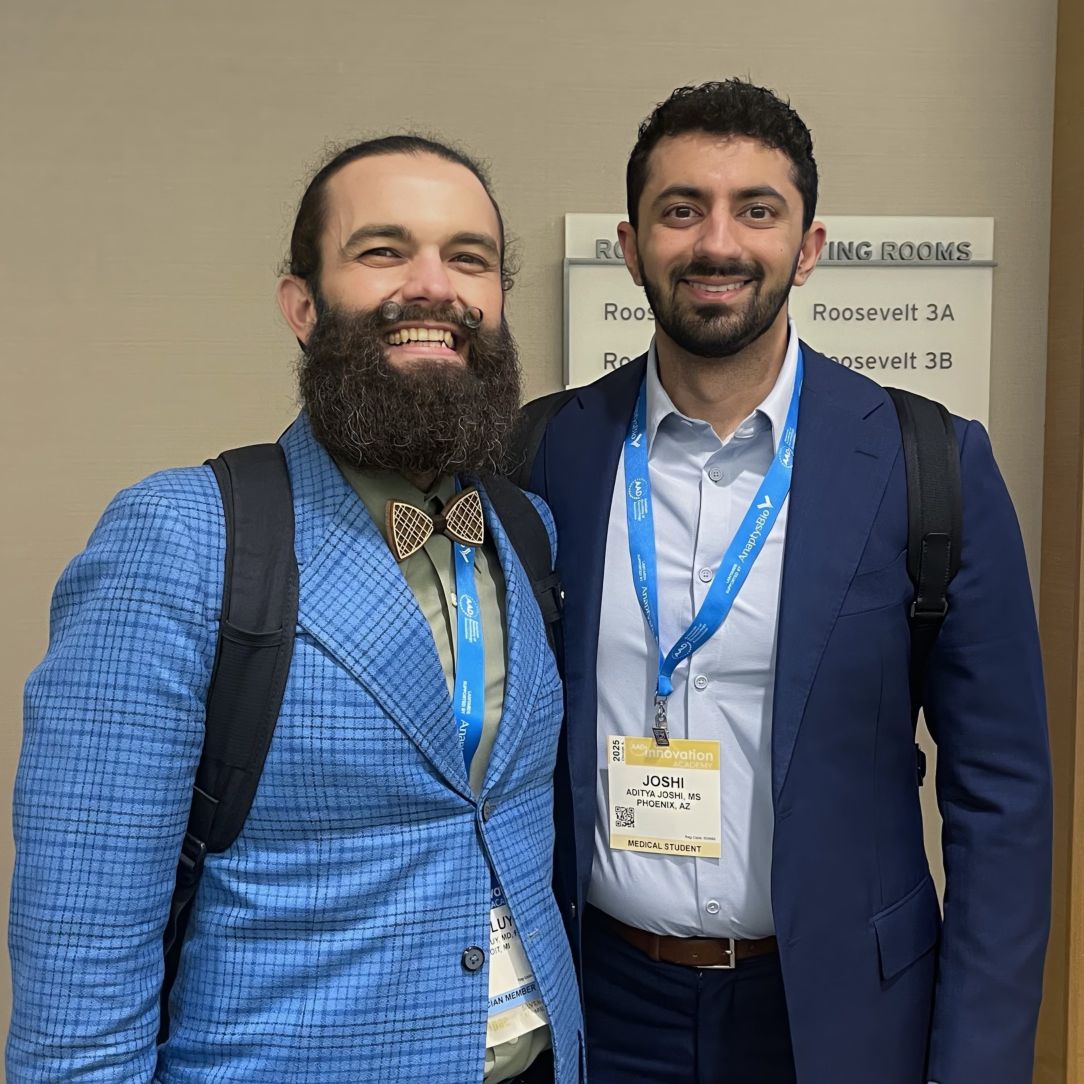
Mentee: Aditya Joshi
Mentor: Dr. Steven Daveluy
Wayne State University
I completed my Skin of Color Society observership under the mentorship of Dr. Steven Daveluy at Wayne State University in Detroit. For a month, I was in high-volume dermatology clinics caring for a predominantly Black, Middle Eastern, and South Asian patient population. Many of the patients we saw were immigrants or refugees, and over time, I saw how language, cultural background, and religious practices shaped how comfortable they felt in the room, how they understood their diagnosis, and which treatments were actually realistic for them. Watching how naturally Dr. Daveluy made room for these conversations and showed patients that their stories and priorities matter just as much as their diagnosis was something I appreciate every day as I continue my journey in medicine.
From the very beginning, I felt like a part of the team at Wayne State rather than just a visiting student observer. Clinically, I was exposed to a wide range of conditions that are especially common or uniquely challenging in patients with skin of color, including hidradenitis suppurativa, pigmentary disorders, and scarring alopecias. I met patients who had lived with years of pain, drainage, and stigma before even seeing a dermatologist. Under Dr. Daveluy's guidance, I learned to appreciate subtle nuances in darker skin tones, to ask directly about pain and how it affected work and family life, and to appreciate how deeply these disorders can affect a patient’s sense of identity and confidence long after flares have calmed down.
One of the highlights of my observership was helping with procedures such as deroofing and CO2 laser excisions for HS. Seeing CO2 laser excision in this setting was especially memorable. It’s a technically demanding yet still relatively underutilized approach that can provide durable control of sinus tracts while preserving surrounding tissues and significantly shortening healing time for patients. Being in the room for those cases gave me a glimpse into how innovative care can truly change the trajectory of advanced HS patients, and it makes me truly excited about what is possible with the future of dermatology.
My mentorship with Dr. Daveluy also extended into ongoing research and mentorship. Together, we co-authored a review of special considerations in hidradenitis suppurativa in skin of color, highlighting data on epidemiology, phenotype, diagnostic delays, pain, quality-of-life burden, and treatment inequities. We also collaborated on additional projects, which helped me connect what I was seeing in clinic to the broader literature on disparities in inflammatory skin disease. Having a mentor who asked what I thought, talked through ideas with me and pushed me to keep growing has been incredibly meaningful.
I’m deeply grateful to the Skin of Color Society for making this experience possible, and to Dr. Daveluy for his generous mentorship and the example he sets as a clinician, researcher, and advocate for his patients. My month in Detroit strengthened my clinical skills, deepened my commitment to caring for underserved communities, and affirmed my goal of pursuing an academic dermatology career centered on health equity and patients with skin of color.