




MEMBERS & PROFESSIONALS

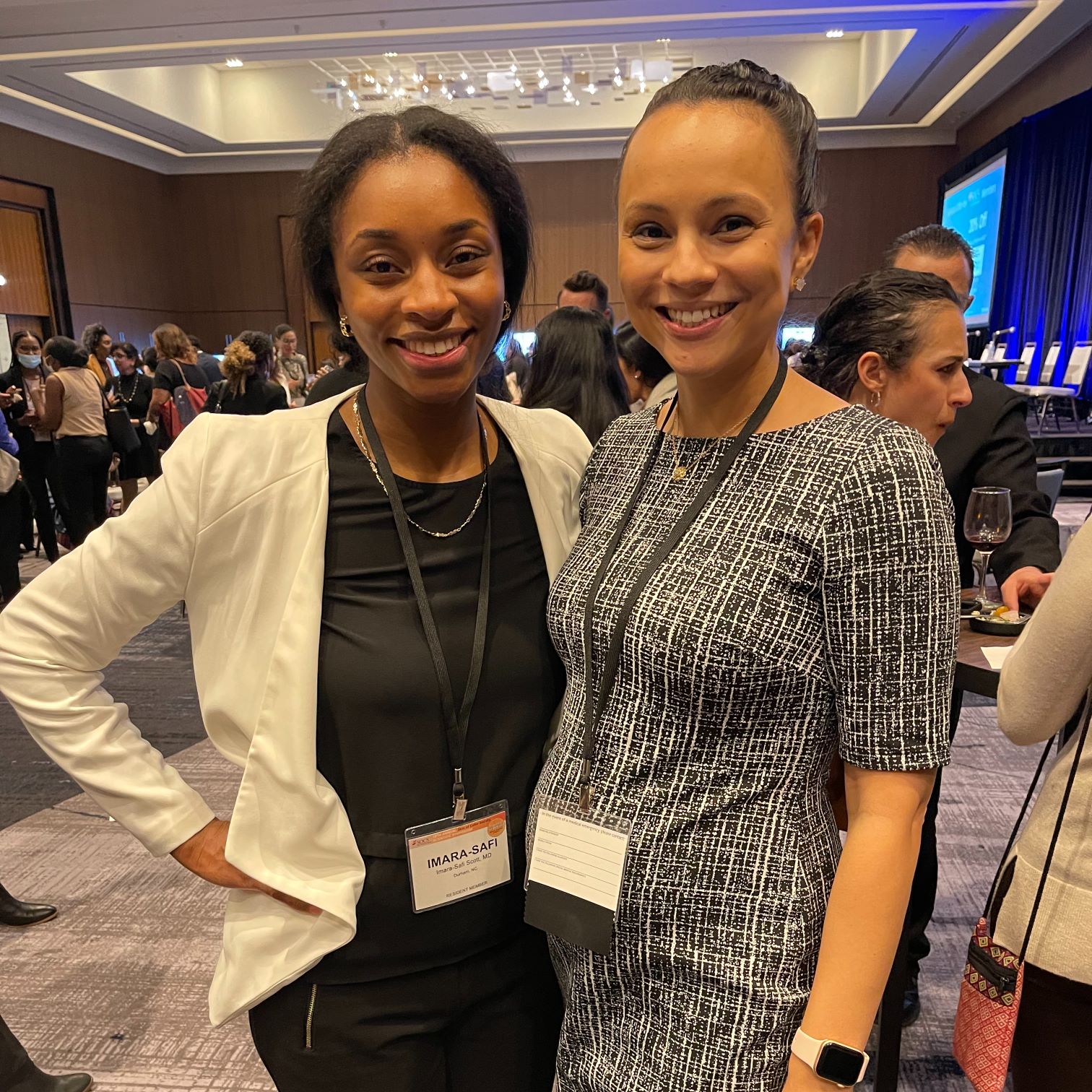
Mentee Imara-Safi Scott with mentor Dr. Eva Kerby
My experience with the Skin of Color Society Mentorship program was excellent! I was paired with a mentor that I already knew personally, which allowed for immediate rapport and comfortability. Dr. Eva Kerby was my mentor, and she and I both did our undergraduate studies at Duke University. We knew each other well back then, and I remember talking with her about our dreams to be Dermatologists all those years ago. It was a pleasant surprise when I saw I had been paired with her!
Dr. Kerby was a fantastic mentor, and she is someone I plan to keep in touch with throughout my career. Talking to her has widened my perspective on what is possible to do during my first few years out of residency. Dr. Kerby incorporates general, surgical, and cosmetic dermatology into her practice and utilizes these skills in her skin of color interests as well. This is what I hope to do in the next few years after residency. Diversifying my skillset early on will help me figure out which topics in Skin of Color, and Dermatology in general, I feel the most passionate about. At my training program, it is not common to have a provider do a combination of general, surgical, and cosmetic dermatology, so having Dr. Kerby to share ideas with and get a feel for how one can successfully mix these in their practice was inspiring. Hearing her journey to discovering her interests in skin of color has also been valuable. I am not sure what “niche” I will pursue just yet, but Dr. Kerby provided sage advice on how to clarify these interests for the future.
Additionally, Dr. Kerby has been an invaluable resource as I look for jobs. I have reached out to her at every step of my job search and will continue to do so. This search can be intimidating for those of us who have never attempted to look for a job in Dermatology, and having wise counsel is crucial. She has helped me sift out offers that are not in my best interest, and she has also helped to point out aspects of a contract/offer that may be red flags. I would not have been able to approach the job search with as much insight without her input. I am very grateful for her.
Lastly, Dr. Kerby is a wife and mother, and she can relate to me in a special way because of this. I have been able to learn from her experiences and see how she handles work/family balance as a practicing Academic Dermatologist. Above all, I hope to establish this balance well throughout my career.
Imara-Safi Scott
Duke Dermatology, PGY4
2021 SOCS Mentorship Program Summary
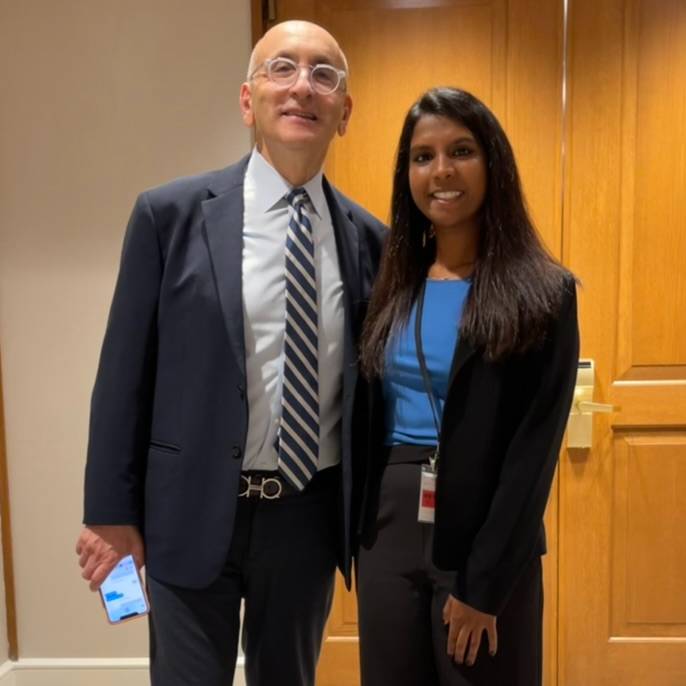
Dr. Leon Kircik and mentee Kristin A. Tissera
I envision my career in dermatology to focus on skin of color patients, and even more specifically skin of color patients with pigmentation disorders like vitiligo and melasma. My interest in pigmentation disorders comes from my paternal grandmother’s experience with vitiligo. This condition hindered my grandmother from experiencing her life to the fullest, and I aspire to be a part of the effort to increase the quality of life of those affected by disorders like vitiligo. I have done work in the social sphere of dermatology, interviewing individuals with vitiligo to understand how it impacts their lives and identities for my senior thesis at Tufts University. I learned that these disorders, though not life threatening, have major psychosocial impacts. Additionally, I completed a Fulbright research project in Singapore aiming to understand how to control pigmentary pathways to eventually develop therapeutics for pigmentation disorders. In beginning my journey through medical school, the one part of the practice of dermatology focused on pigmentation and skin of color that I have yet to experience is the clinical side.
I have had a wonderful experience so far in the SOCS Mentorship program, hearing from my mentor, Dr. Leon Kircik about the practice of skin of color dermatology. Our mentorship has consisted of monthly phone meetings to discuss goal setting, planning for residency applications, and research goals. Dr. Kircik was a great sounding board as I made my way through my first year of medical school and began my second year. At Duke, our third year of medical school is spent entirely on research. Dr. Kircik was able to provide great guidance as I navigated the process of finding a research mentor and setting up my research year with Dr. Elena Hawryluk at Massachusetts General Hospital.
During our mentorship year, I was also lucky enough to work on a project about psoriasis in patients with skin of color alongside Dr. Kircik and his research associates. Learning about psoriasis, a condition with similar psychological and social impacts to vitiligo, especially in those with skin of color, was eye opening. I look forward to learning more about conditions where psychosocial impacts and advocacy work should be considered as seriously as physical impacts.
Ultimately, my mentorship under Dr. Kircik was a fruitful and career-building experience. I am thankful for his guidance and look forward to keeping in touch with him as I work towards my goal of becoming a dermatologist.
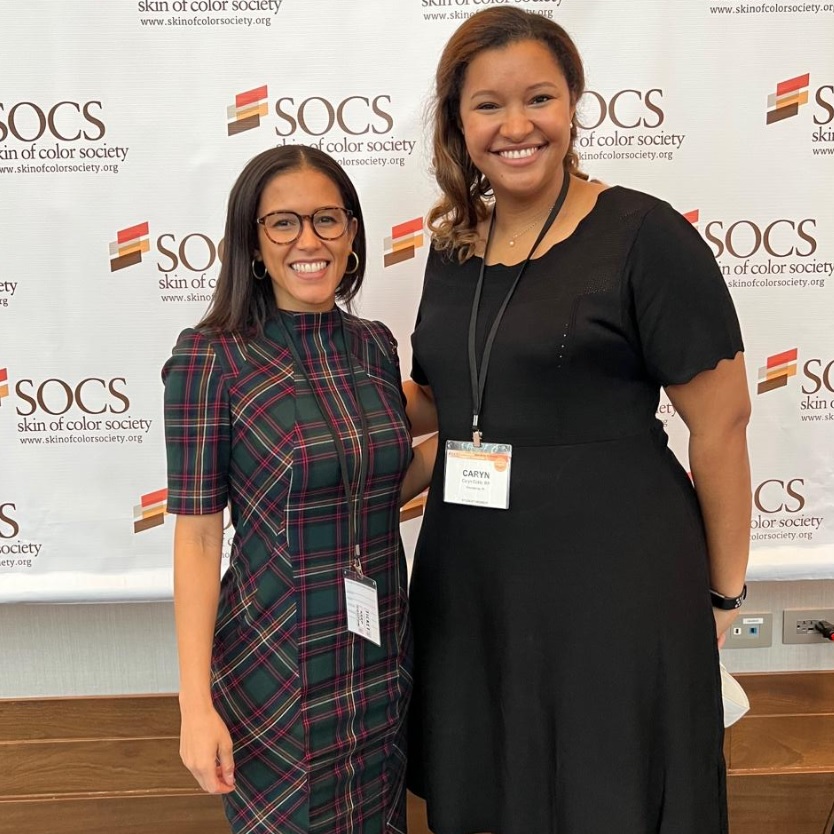
Dr. Julia Mhlaba with mentee Caryn Cobb
The Skin of Color Society Mentorship Program has been a fantastic experience. I feel very honored to be connected and paired with Dr. Julie Mhlaba, as she is so open and available to provide any and all advice on applying into dermatology residency and more. Dr. Mhlaba is a fantastic resource as a board certified dermatologist, who is established in her career, but also having finished residency recently, she provides the unique perspective of someone who has gone through the very same process, and knows what to look for, and how to guide me on my journey with dermatology. She is always very available to connect and chat, even though she is in Chicago and I am in Providence, which has been so nice and helpful. We check in with each other periodically and I love chatting with her as I look up to her as a physician and a person-she is very positive and I feel like she is a true champion for me. She has guided me on how I should think about presenting myself with dermatology applications and interviews coming up for me this year and I also know she will be an available resource to go over my personal statement and application from how to structure it to what specifics should be included. Additionally, I feel that she has been and will continue to be an amazing person to help guide me through multiple aspects of my life, from practicing for interviews, but also life and career thoughts and inquiries so that I can be successful, and navigating through med school to residency and beyond can be difficult on your own. Furthermore, I really appreciate her fresh perspective and feedback as she provides thought-provoking questions, which challenge me to think about my plans overall moving forward and my personal goals. I already feel like she has my best interests at heart and is an open, kind, willing ear to listen and provide guidance, especially as a fellow woman of color, which I truly treasure. She continues to provide advice on school, residency and life, as well as research, which is a big interest of mine. I also appreciate how she is always responsive and communicative with kind reassurance and positive vibes, which is wonderful! Though maybe a small gesture, when I first met her at the SOCS meeting at AAD she sat with me the whole meeting and came to my poster presentation. Her gesture of kindness made me feel as though I had not only gained a mentor but also a really nice friend from the start, which means a lot to me and I know is rare. I am so thankful to have Dr. Mhlaba in my corner and I know this mentor relationship is ongoing and she has been so wonderful and open to being my mentor throughout my career, beyond just this year, which I truly value and appreciate. Thank you so much to the Skin of Color Society for introducing me to Dr. Mhlaba, who I know is going to be in my life forever and for this fantastic mentorship opportunity! I look forward to paying it back and being such a great mentor to someone else soon. Thank you so much.
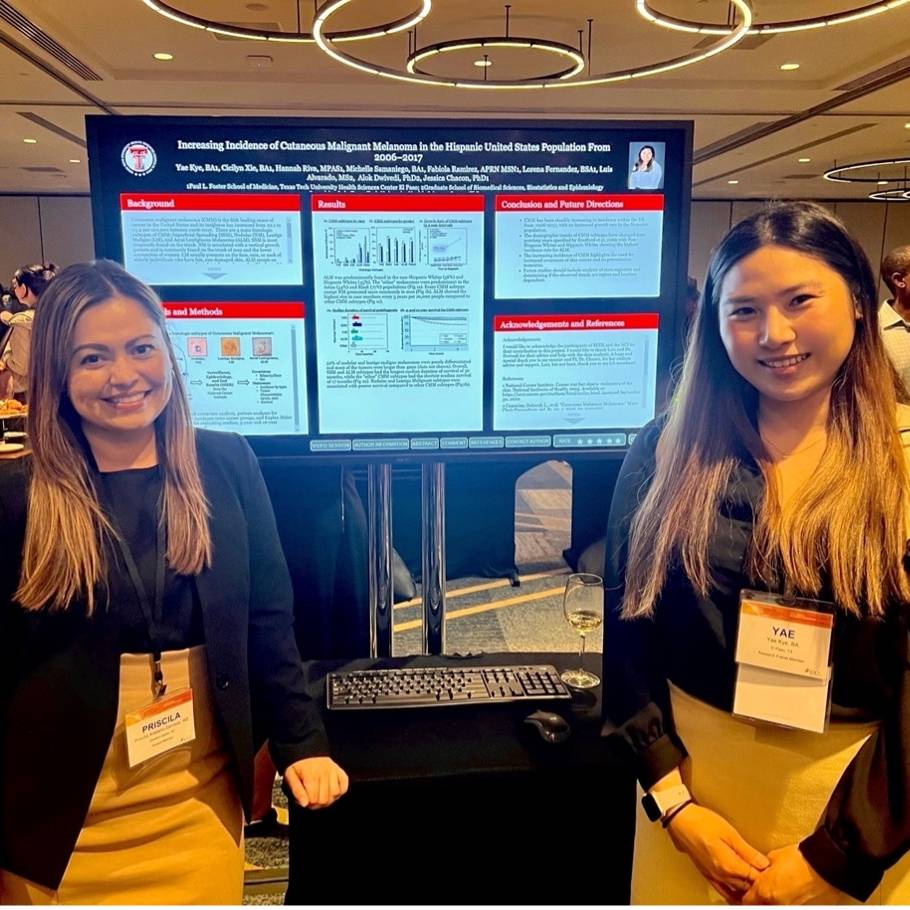
Dr. Michelle Rodrigues with mentee Priscila Arellano Zameza
I first heard about the Skin of Color Society at the end of my first year in medical school from a student in the year above me who was also interested in dermatology. At that time, I was starting to consider dermatology as a field of interest, and knew it was imperative to pursue dermatology-specific opportunities. I loved Dr. Taylor’s story and the Society’s commitment to educate on dermatologic areas of interest in skin of color.
Upon joining SOCS, I was excited to find out about its mentorship program. I applied without hesitation at the start of my second year, in the hopes of being paired with a dermatologist who could answer my questions about the field, point me in the right direction with regards to research, and provide advice and support through the ups and downs of medical school. Right before starting third year, I was notified that I had been paired up with Dr. Michelle Rodrigues who is based out of Melbourne, Australia.
One of the first challenges we faced as mentor and mentee was overcoming the time difference, as Melbourne is 14 hours ahead of Winston-Salem, North Carolina. With diligent planning, we were able to schedule an initial, introductory phone call. From that phone call I learned about Dr. Rodrigues’ own journey into dermatology, and the hard work and grit that went into getting her to where she is today. She is the founder and director of Chroma Dermatology, a center dedicated to pigmentary disorders and people with skin color, she is involved in clinical research and has authored various publications, and she is a lecturer at the University of Melbourne. In short, Dr. Rodrigues is an inspiration for what one can achieve in their medical field of interest when they have a genuine love for what they do.
In that same phone call, Dr. Rodrigues learned some about my own background, and about my goals for my participation in the mentorship program. We set up a follow-up Zoom meeting, where we spoke candidly about the challenges that lay ahead in my journey to applying for a residency in dermatology. She made suggestions for next steps and began connecting me with faculty in US-based residency programs, including at Henry Ford in Detroit.
When I reflect on my mentorship experience, I believe I’ve achieved most of what I set out to accomplish over a 1-year period. I formed a relationship with a trailblazer in the field, one I hope to continue in my professional life. Dr. Rodrigues’ support, although at a distance, gave me the confidence to reach out to faculty for research projects. I’ve since been involved in a variety of dermatology-related research and community projects, some of which have been published and some which I hope to present at conferences in the upcoming year. I’ve taken the lead on dermatology-specific initiatives that are of interest to me, including for Spanish-speaking patients with hidradenitis suppurativa, and a community outreach program for increased skin cancer awareness in patients with skin of color. I’ve also really enjoyed the monthly, virtual meetings available to all mentees in the program, where I’ve gained advice and tips from current dermatology residents and program directors.
Although Dr. Rodrigues could not attend the SOCS meeting in New Orleans this year, I decided to go and got to meet some of the faculty I had been introduced to virtually. I met other mentees in the mentorship program, research fellows (including Yae Kye pictured with me), and really enjoyed being a part of the larger SOCS community. As I get closer and closer to applying for residency, I intend on continuing my relationship with Dr. Rodrigues. It’s my hope that we meet in person one day, so that I may thank her in person for instilling a sense of boldness and for helping me prioritize where I invest my time and energy. This advice, along with the advice of the other mentors I’ve found along the way, will hopefully make me into a well-rounded, dermatology residency applicant, and one step-closer to my ultimate goal of becoming a bilingual dermatologist.
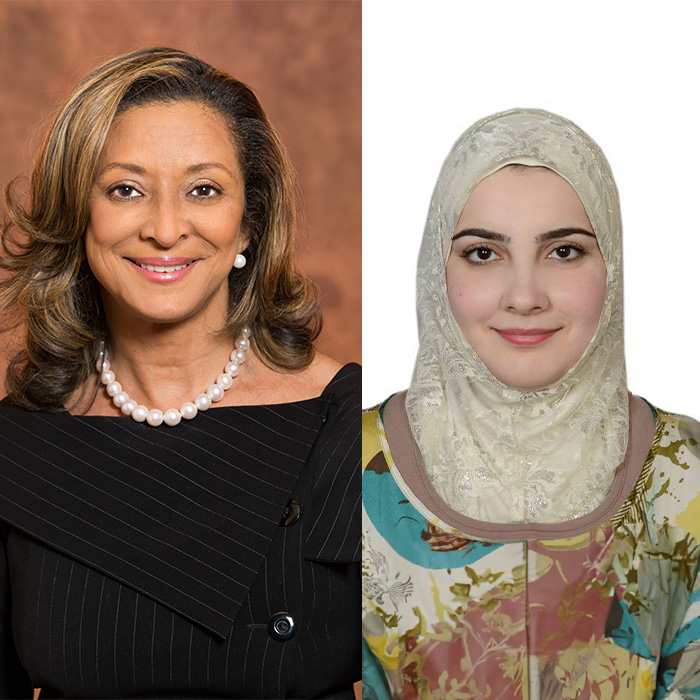
Dr. Susan C. Taylor with mentee Rawan Moutraji, MD
As I was introduced to the Skin of Color field and the SCOS in recent years, I became excited for the idea of a mentorship program that would enable me to connect and learn from an expert in this great field at this stage of my career. I was very thrilled when I got the 2022-2023 mentorship program with Dr. Susan C. Taylor.
During the program, I met with my mentor several times via zoom and communicated through emails as well. We worked on a literature review article about skin aging exposome in Skin of Color populations. We performed an extensive search in the PubMed and Google scholar databases, and we included peer-reviewed studies in SOC populations around the world regarding one or more of the skin aging exposome factors, and we grouped and organized the studies under each factor of the skin aging exposome.
This hard work paid off when our article was recently published in the Dermatologic Surgery Journal. We also got this accepted as iPoster at the 19th Annual Skin of Color Society Scientific Symposium in New Orleans, LA, and then I got the chance to attend the meeting in person and to meet with great people during it.
This mentorship program was an amazing and big opportunity for me. I got to acquire more knowledge about the unique aspects of skin diseases in Skin of Color population. I was lucky to learn from a true leader and idol in this field, Dr. Susan Taylor. I highly recommend this program to any young physician who is looking to solidify career goals and become more involved in the Skin of Color field by connecting with its leaders.